DefenAge is an award-winning and dermatologist recommended skin care brand that’s disrupting the anti-aging skin care market. Their proprietary use of powerful molecules called defensins are the star of DefenAge’s effective formulas.
Defensins wake up dormant cells and prompt them to create brand-new skin cells. Using new, sophisticated technology, age-repairing defensins are a breakthrough in skin rejuvenation that can compete with time-honored retinoids.
What Are Defensins?
Known for their antimicrobial effects, defensins were first associated with the immune system. But in the past several years, scientists have discovered that there are also age-repairing qualities to these natural molecules.
While researching stem cell therapies for Type 1 diabetes and wound healing, the parent company of DefenAge found that two members of the defensin family may activate the dormant resources of our body and cause our body produce new, young skin. Their unexpected and novel discovery has led to a patent-pending use of these regenerative molecules in a formula called Age-Repair Defensins.
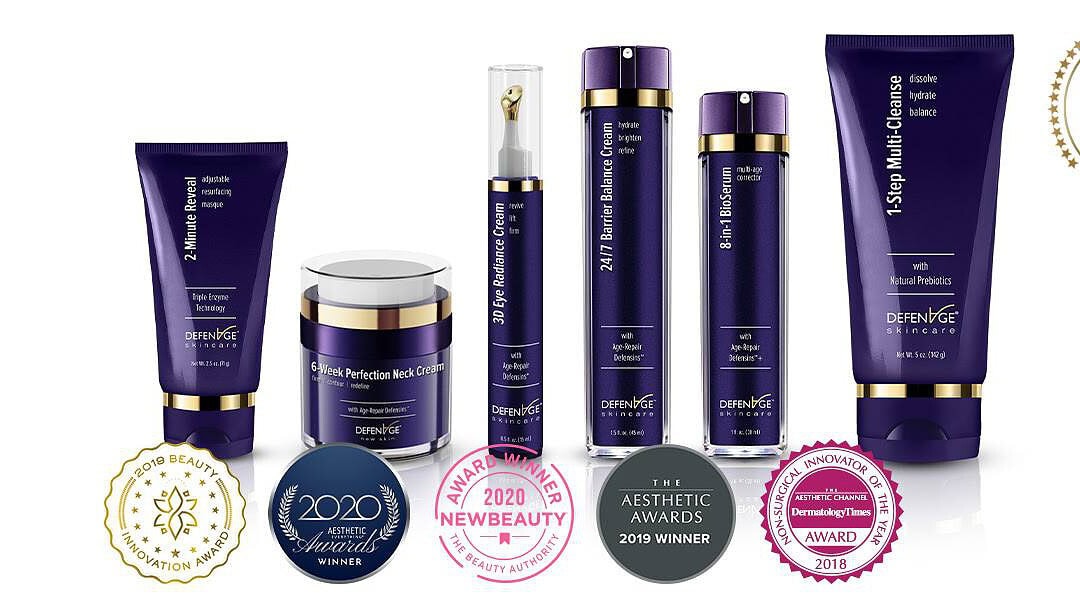
DefenAge’s Skin Care Products
Consumers searching for an anti aging cream and other age-repairing products should check out DefenAge’s 8-in-1 BioSerum, a smart serum that’s infused with the highest daily percentage of Age-Repair Defensins. The serum is effective for all skin types and ages.
After applying the 24/7 Barrier Balance Cream moisturizer from DefenAge, apply one pump of the serum over your entire face, and another pump over your neck and décolleté. It may seem counterintuitive to moisturize and then use serum, but there’s a valid reason for this application process. The moisturizing cream contains ingredients that help the age-correcting ingredients in the serum penetrate deeper into your skin’s top layers. Putting the serum on first will limit this penetration and you will be less likely to see the dramatic improvements that have been experienced by the participants in DefenAge’s clinical studies.
Clinical Power Trio
The core regimen created by DefenAge is the Clinical Power Trio, which includes 24/7 Barrier Balance Cream, 8-in-1 BioSerum, and 2-Minute Reveal Masque. When these three products are used together, clinical studies have shown a visual improvement in the appearance of aging skin without irritation, inflammation, or sun sensitivity.
The 24/7 Barrier Balance Cream and 8-in-1 BioSerum use revolutionary skin-brightening technology, with Age-Repair Defensins at the helm, to target age spots and other discolorations at the source. When used with the 2-Minute Reveal Masque twice weekly, residual unevenness in skin and dead surface cells can be removed. Within a week, skin can look visibly brighter and skin discoloration is often less visible.
If you are interested in reprogramming dormant skin cells to generate healthy, new skin with defensins technology, give DefenAge a try.
Learn more about DefenAge and browse dermatologist recommended skin care products at Valeriya Life Skincare
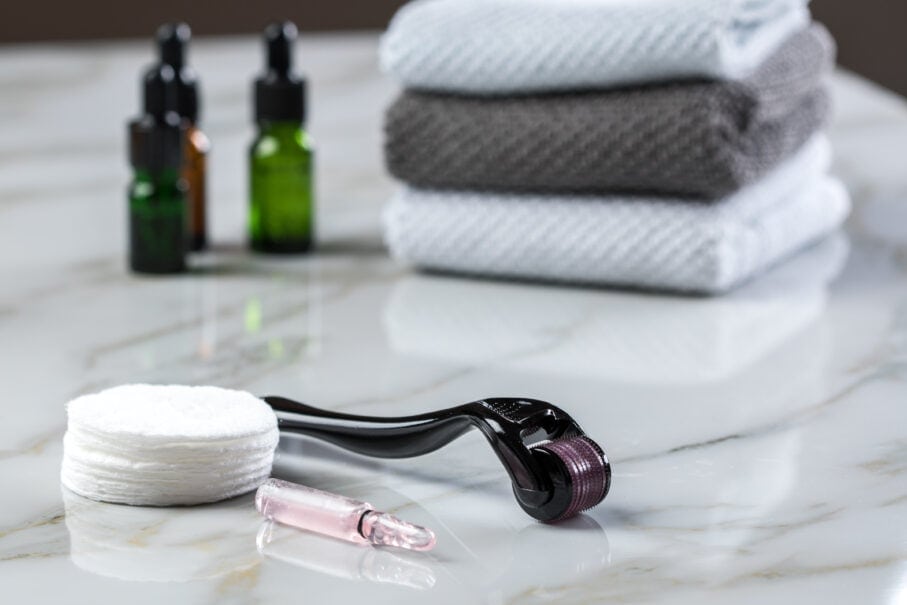
Dermarolling is a form of microneedling, a treatment that creates tiny purposeful holes in the skin using small needles. After holes are created, the body heals these wounds by bringing collagen and elastin to the surface. Increased amounts of collagen and elastin means that skin will look smoother and younger. This technique is great for Fine Lines Treatment with Dermaroller, stretch marks, scar reduction, wrinkles, large pores, dark spots, saggy skin, and acne scars.
Microneedling is a procedure typically performed in a medical spa or dermatology office by trained professionals. However, the Dermaroller offers a less expensive option for people to use at home.
How to Use a Dermaroller
1. Prep your skin. Wash your face and hands thoroughly. Also, be sure to exfoliate skin to remove any dead skin. This will create a more effective result.
2. Roll in vertical motions. Press the roller into your skin and roll up and down in a vertical line. Pick up roller, move it to a new patch of skin (next to first line), and roll another vertical line. Do this across the entire surface. It is important to pick up the roller from the face when moving to a new spot. Do not drag it. This will prevent skin tears and scrapes.
3. Roll it horizontally. Start at the top of the cheek and roll again, this time move back and forth in horizontal motions across the surface down to the jawline. Again, pick up the roller and move it, do not drag it.
4. Roll it diagonally. Finish by rolling in diagonal lines from your ear lobe to your chin. Again, pick up the roller when moving to a new spot.
5. Repeat across your face Repeat the vertical, horizontal, and diagonal lines across your other cheek, your forehead, and your chin until your entire dace has been covered. Switch to a different roller head that has smaller needles to treat the areas around the eyes as skin is more delicate here.
6. Use Dermaroller on body If desired, you can use the dermaroller on stretchmarks and other scars on the body. Roll over desired area with same technique as for face.
7. Apply a serum Applying a serum will help soothe the face and also penetrate into the skin via the tiny holes we just created.
Vitamin C or retinol serum is best for fine lines and pigmentation
Hyaluronic acid serum is best for dryness along with fine lines.
Niacinamide serum is best for acne and oily skin.
Snail mucin or secretions is best for inflammation or discoloration. It can also be used for fine lines.
What needle length is best for my skin type?
Choosing the correct needling length is important to see results. If you have too short of a needle, it will not penetrate deeply enough into the skin to stimulate collagen and elastin production. It is also important to note that needles longer that 1.5 mm should not be used at home.
Skin Concern
Appropriate Needle Length
Fine Lines
0.5mm-1mm
Deep Wrinkles
1.5mm
Shallow Acne Scars
1mm
Deep Acne Scars
1.5mm
Uneven Skin Tone
0.5mm
Skin Discoloration
0.5mm – 1mm
Stretch Marks
1.5mm
Surgical Scars
1.5 mm
How Often Can I Use My Dermaroller?
The frequency on how often you can dermaroller depends on how well your skin tolerates it. We recommend to start slowly and work your way up as your skin gets used to the procedure. Here are some recommended guidelines to get you started-
0.5 mm needles = 1-3 times per week .
1.0 mm needles = every 2 weeks
1.5 mm needles = every 3-4 weeks
Who Shouldn’t Use a Dermaroller?
If you have any or all these conditions, you should avoid using the dermaroller:
-open acne or inflamed skin
-Eczema
-Warts
-Psoriasis
It is also important that you do not reuse the dermaroller. Doing so could introduce bacteria to the skin and result in skin damage or scarring. valeriya.life
When Will I See Results?
Results typically occur dramatically and quickly. You will start to notice smoother, clearer skin within the first 2-3 weeks of treatment. How quickly you see results depends on the condition you are treating, the needle length that is used, and how extensively your body needs to remodel the affected area. Skin renews itself every 40 days, so it is very important that you continue treatment for at least a three-month period. We recommend taking before and after photos to help you document the improvement in your skin’s condition.
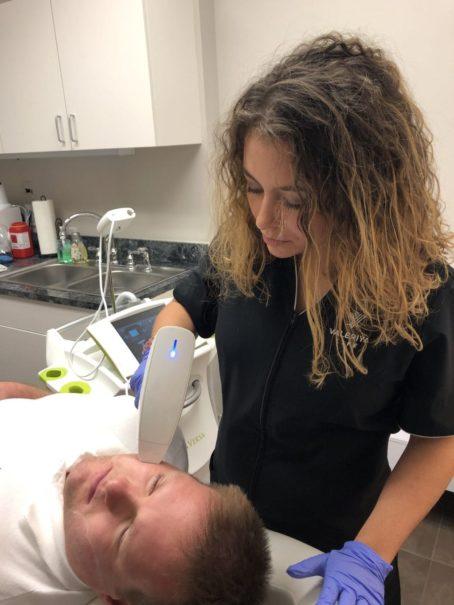
Are you distressing over your enlarged pores, post-acne scars, fine lines or wrinkles? Then you may consider nano-fractional radiofrequency (nano-RF) to restore the skin’s broken collagen matrix in the problem areas. Nano-RF is a new standard for innovative, non-surgical treatment for facial rejuvenation and restoration that deals with skin laxity, uneven texture, fine lines, wrinkles, and even stretchmarks. Valeriya Life’s Advanced Aesthetic Center now offers this treatment to men and women of all skin complexion types.
What Is Nano-RF Skin Resurfacing?
Our Center uses the Venus Viva system nano-RF technology. This Venus Versa™ treatment works with tiny pins that safely deliver heat through the skin’s surface. This creates tiny dermal wounds, which the body then heals naturally by intensively producing collagen in order to close those wounds. Unlike micro-needling, nano-RF is considered a more sterile technique as no physical penetration takes place. The heat, which is produced by the metal pins, gently “burns” the skin and creates a clean micro wound. This process repairs signs of skin damage seen on the surface of the skin. And because the wounds are very small, the treatment is much more comfortable than lasers or chemical peels.
What Conditions nano-RF Can Treat?
The main indications for Nano Fractional Radio frequency treatments include:
Enlarged pores
Textual irregularities
Acne scars
Deep lines and folds
Necklace lines
Lax skin
Post-acne pigmentation
Our Center utilizes the best evidence-based treatment protocols to ensure high quality and best results for each aesthetic problem listed above. Depending on the extent of skin damage, our therapists modify the depth and width of the wounds. For example, for deep facial scars, it is important to have a winder and deeper wound.
In contrast, for fine lines around the eyes, we use a more superficial regimen, as the skin around the eyes is much thinner than on other parts of face. Nano-RF has a superior depth penetration, when compared with other devices. During the healing time, the skin may look slightly swollen, reddish, and has lots of small dots where the needling had been done. These dots feel a little grainy to touch.
Is Nano-RF Treatment Painful?
Comfort of our patients during a procedure is our priorities. Before the treatment, we apply a numbing cream for 20-30 minutes. This helps to make the procedure almost painless. Treatment times vary depending on the patient, but a single skin session typically takes 15-30 minutes. This makes it easy to fit into a busy schedule. Most patients receive 3-4 treatments per area done 4-6 weeks apart. Treatment plans also vary by patient.
What Is Nano-RF Downtime?
Nano-RF sessions are safe for all skin tones. Unlike lasers or other treatments where recovery can take up to 10 days, Venus Versa™ skin resurfacing treatments have very low downtime—you can resume your normal skin care and makeup routine 24 hours afterward. This is just one of the many reasons Venus Versa™ is quickly becoming the go-to solution for patients who want results without having to hide their face for two weeks while they recover. With each consecutive procedure the post-procedure downtime gets shorter as the skin capacity to heal gradually increases. At Valeriya Life Center, we recommend using the Stem Cell Therapy Serum (SCT). It has a powerful post-treatment anti-inflammatory effect.
Slight swelling of your treated areas occurs immediately. Significant swelling and redness of the treated areas and untreated parts may occur following your procedure and will be maximal at 24 – 48 hours.
There will be redness and slight heat emanating from the treated area for the first 24 hours, akin to a mild sunburn. It is unusual to experience severe or excessive pain; you should notify us if this occurs. Tiny scabs will usually be formed 24 – 72 hours post-treatment, and may remain for several days. Some mild discomfort may occasionally follow resurfacing treatment.
What Are Results of Nano Fractional Radio frequency Treatments?
This skin resurfacing treatment helps patients get smoother, healthier skin by reducing signs of skin damage. The improvements include:
Decreased visible pores for even skin texture
Reduced signs of aging for a fresher more youthful look
Evened out textural irregularities for refines looking skin
Reduced acne scars for a clearer and healthier complexion
Diminished deep lines and folds for younger looking skin
Corrected necklace lines
Diminished laxity of the skin for more firm face, neck and décolleté
What Is Post-Nano-RF Procedure Care?
Post-Procedural Care for fractional RF: DAY 1-7
The healing time for any given treatment varies between different clients. The following represents the general recovery phases you might expect.
To minimize swelling, keep your head elevated. It is not uncommon for clients to experience under-eye swelling for the first 1 to 2 days, but this swelling will subside.
The scabs should not be touched or scratched even if they itch, and should be allowed to shed off naturally.
Activities: You may return to regular activities immediately. It is advised that you avoid hot baths, saunas, Jacuzzis, and pools for the first two days following treatment, as the bacteria common to these sites can affect the skin post-resurfacing and cause an infection. Some minor heat emanating from the treated area is normal, but please do not apply ice or cooling compresses, as that heat is the body’s natural healing response.
Make-Up: After 24 hours, most resurfacing clients are ready for makeup to hide the pinkness of the skin. If applied, it is important that you remove all makeup from the skin at night. Do not sleep with makeup on the treated area.
Avoiding the Sun: Avoiding direct sun should become a permanent component of your
long-term skin care program. Always use an SPF 30 or greater beginning 24 – 48 hours after the skin has fully healed. Sun exposure, tanning beds, and artificial sunless tanning lotions are not allowed in the treated areas during the course of the treatment and healing.
Long-Term Skin Care: In addition to avoiding direct sun exposure, we suggest all clients use long term skin care that will optimize the youthful, rejuvenated appearance you have achieved.
We offer clients a program for long-term facial skin maintenance This program offers skin maintaining and rejuvenating creams that are only available and administered by our medical team. The physician on our medical advisory team recommends the use of the Venus SkinTM Post Treatment Recovery Kit and Venus SkinTM Stem Cell Therapy Serum and Accelerator for at-home care treatment post 24 – 72 hours. Note that these assisting agents should always be used according to their accompanying instructions. valeriya
Are you in search for non-invasive treatment options for reducing the appearance of fine lines, wrinkles, lax skin, and enlarged pores? Then learn about how microneedling treatment at Valeriya Life Advanced Aesthetic Center can improve your own collagen production, a building block for smoother and tighter skin.
Why collagen production is a target of microneedling ?
As we get older, our collagen production levels naturally decline by 1% annually, starting at the age of 25. Over lifetime, we also experience exposure to the sun that causes destruction of the skin’s collagen through a process called photoaging. Photoaging effects accumulate over time; it causes deep damage to the skin’s cells and DNA. Our skin starts producing some defective collagen molecules. This results in a less stable collagen matrix that holds the skin. Therefore, we can see how our skin becomes laxed and starts sagging under the force of gravity.
As we get older, our collagen production levels naturally decline by 1% annually, starting at the age of 25.
What is microneedling ?
Microneedling, aka collagen induction therapy, is a minimally invasive treatment with the use of derma-pen or skin-pen. This device has a cartridge with the thin metal needles, which can vary in numbers. The main purpose of this device is to penetrate the skin to a certain depth in order to create multiple tiny holes. These holes send a signal to the body that the skin’s integrity is broken. Our body “reads” these signals as SOS and activates the immune system to quickly repair the skin.
This essential mechanism of the body’s response is unique; it effectively protects the body’s organs and systems from the external environmental hazards. The disturbed skin fibroblasts start producing an increased amount of collagen to close these holes. That is how microneedling “stimulates” collagen production. It is interesting, that with each consecutive procedure the repairing capacity of the skin increases. This may be due to our immune system’s memory about the specific damaging mechanism.
When can i start microneedling ?
The good news is microneedling not only stimulates the production of collagen, it also accelerates the skin cells reproduction.
It is important to remember, as we age, our hormones’ levels decline. Specifically, estrogen is responsible for skin’s youthful appearance.
With less estrogen, the skin cells’ renewal declines. We literally, start “wearing” our skin cells longer when we get older. Therefore, the skin in older people appears less bright; it gets drier and appears dull. The good news is microneedling not only stimulates the production of collagen; it also accelerates the skin cells reproduction. The skin dermis starts producing more fibroblasts and growing new micro-vessels.
As a result, the skin rejuvenates! It may be wise to start microneedling, as an anti-aging intervention, after the age of 30 when the first fine lines start appearing. As estrogen production continues to decline, regular microneedling treatments may fight the skin aging process more effectively. At the ages of 40 and, particularly, 50, our skin will benefit from a greater number of treatments: by the time when the estrogen production drops to minimal level, the skin quality will appear much better. Women who are prescribed with hormone replacement can extend their skin’s repairing capacity much longer.
What areas can be treated with microneedling
Microneedling can be applied to the entire face, neck, décolleté, arms, hands, knees, abdomen, back, and other parts that develop wrinkles, scars, stretch marks. Microneedling can also be used for lips.
Are there restrictions for microneedling ?
Microneedling has relative and absolute contraindications. The relative contraindications include:
Keloids
History of eczema and psoriasis
History of actinic keratosis
History of herpes simplex infections
Complicated diabetes
Presence of raised molds and warts.
The absolute contraindications include:
Scleroderma
Active bacterial or fungal infection
Rosacea
Immunosuppression
Scars less than six months
How does micro-needling procedure look like ?
At Valeriya Life, for face microneedling, first, we perform a face skin texture assessment with the use of VISIA, an advanced skin analysis system. Then, we apply a numbing cream for 15-20 minutes. After a thorough cleansing of the skin with anti-septic solution, we perform a treatment that can last from 15 to 30 minutes. For each customer, we use only a sterile cartridge.
Is microneedling painful ?
We apply a numbing cream to make the procedure comfortable for our clients.
During the procedure, we can apply hyaluronic acid serum, stem cell serum, and peptides to deliver active ingredients deep to the skin. In younger people with fine lines, the needle’s penetration level does not exceed 0.30 mm. If a person has post-acne scars, then our staff increase the length of the needle to 2.50 mm depending on the severity of post-acne holes and areas of depression.
For people with deep wrinkles, our staff also uses longer needles to reach out the dermis level where the fibroblasts live. Having a professional tattoo artist on our staff, we also use microneedling as a preparation treatment for the skin micropigmentation. Preliminary microneedling helps to exfoliate and smooth the skin out. This helps the pigments be distributed in the skin more evenly and stay longer giving the face a glowing look.
what is the downtime of microneedling?
After the treatment, the skin appears slightly red. In naïve clients, the redness may stay longer than in the clients who had more than one treatment. Next day, the skin may be slightly swollen. After approximately seven days, the skin can flake. Noticeable results in the skin’s texture appear within a couple of weeks. Individuals with oily skin have a much shorter downtime.
How long do the results last?
You can see the results right after the first treatment. Microneedling has a cumulative effect; therefore, the results are much better when you have a series of treatment. The repeated treatments can be performed every three to four weeks.
Effects of microneedling
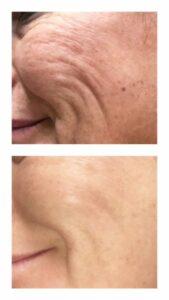
Microneedling reverses the skin damage and signs of aging. After this treatment, the skin evens out, gets tighter, and even gain some volume. Pores look smaller. Scars diminish and stretch marks get less noticeable.
What is the average cost of microneedling?
$539
Microneedling aftercare
Since, microneedling creates tiny holes in the skin, it is important to prevent infection and enable a quick healing. For this, it is important to properly wash the hands.
To minimize swelling, keep your head elevated. It is not uncommon for clients to experience under-eye swelling for the first 1 to 2 days, but this swelling will subside.
Activities: You may return to regular activities immediately. It is advised that you avoid hot baths, saunas, Jacuzzis, and pools for the first two days following treatment, as the bacteria common to these sites can affect the skin post-resurfacing and cause an infection.
Long-Term Skin Care: In addition to avoiding direct sun exposure, we suggest all clients use long term skin care that will optimize the youthful, rejuvenated appearance you have achieved.
Make-Up: After 24 hours, most microneedling clients are ready for makeup to hide the pinkness of the skin. If applied, it is important that you remove all makeup from the skin at night. Do not sleep with make up on the treated area.
Avoiding the Sun: Avoiding direct sun should become a permanent component of your long-term skin care program. Always use an SPF 30 or greater beginning 24 – 48 hours after the skin has fully healed. Sun exposure, tanning beds, and artificial sunless tanning lotions are not allowed in the treated areas during the course of the treatment and healing.
We offer clients a program for long-term facial skin maintenance This program offers skin maintaining and rejuvenating creams that are only available and administered by our medical team. The physician on our medical advisory team recommends the use of the Venus SkinTM Stem Cell Therapy Serum for at-home care treatment post 24 – 72 hours. Note that these assisting agents should always be used according to their accompanying instructions.
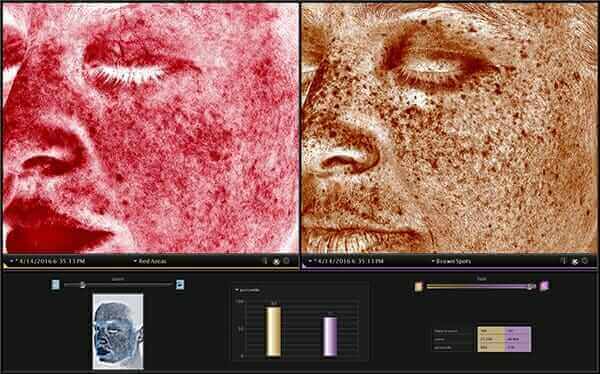
Our VISIA Skin Analysis system provides clients with a clear visual assessment of what is happening beneath the skin’s surface It also gives a quantitative analysis to support better aesthetics treatment planning.
Cross-polarized and UV lighting are used to record and measure surface and subsurface skin conditions. UV photography provides detailed data for sun damage assessment and analysis. It also includes UV fluorescence imaging to reveal porphyrins.
VISIA’s unique imaging technology separates the color signatures of red and brown skin components. This helps provide better visualization of conditions that cause color concentration, such as spider veins, hyperpigmentation, inflammation, and other skin concerns.
With this advanced system, Aesthetics Treatment can be planned more accurately based on each client’s skin condition.
Everyone, for all skin types and conditions, especially those concerned with results and how quantifying how the skin is progressing
Recommended Frequency: Before and after a full series of treatments.
Price: $150
Time: 20 minutes
What Reports Can I See ?
TRUSKIN AGE®
Determines the patient’s overall skin condition and age, providing a revolutionary new metric to guide the selection of skin care products and treatment options.
PERCENTILE SCORES
VISIA’s patented comparison to norms analysis uses the world’s largest skin feature database to grade your patient’s skin relative to others of the same age and skin type. Measure spots, wrinkles, texture, pores, UV spots, brown spots, red areas, and porphyrins.
MEANINGFUL COMPARISONS
Compare results side by side for any combination of views, features or time points, including graphs and numerical data. Zoom and pan images in tandem for clear and easy comparisons.
As well as a comprehensive quantitative analysis on eight common skin features that clients are able to review at home:
The above skin analysis features the following:
Spots: Spots are typically brown or red skin lesions including freckles, acne scars, hyper-pigmentation and vascular lesions. Spots are distinguishable by their distinct color and contrast from the background skin tone. Spots vary in size and generally have a circular shape.
Pores: Pores are the circular surface openings of sweat gland ducts. Due to shadowing, pores appear darker than the surrounding skin tone and are identified by their darker color and circular shape. The VISIA system distinguishes pores from spots based on size; by definition, the area of a pore is much smaller than a spot.
Wrinkles: Wrinkles are furrows, folds or creases in the skin, which increase in occurrence as a result of sun exposure, and are associated with decreasing skin elasticity. This skin feature has the greatest variability from image to image as it is highly dependent upon the facial expression of the client. Wrinkles are identified by their characteristic long, narrow shape.
Texture: Texture is primarily an analysis of skin smoothness. Texture measures skin color and smoothness by identifying gradations in color from the surrounding skin tone, as well as peaks (shown in yellow) and valleys (shown in blue) on the skin surface that indicate variations in the surface texture.Texture is primarily an analysis of skin smoothness. Texture measures skin color and smoothness by identifying gradations in color from the surrounding skin tone, as well as peaks (shown in yellow) and valleys (shown in blue) on the skin surface that indicate variations in the surface texture.
Porphyrins: Porphyrins are bacterial excretions that can become lodged in pores and lead to acne. Porphyrins fluoresce in UV light and exhibit circular white spot characteristics.
UV Spots: UV spots occur when melanin coagulates below the skin surface as a result of sun damage. UV spots are generally invisible under normal lighting conditions. The selective absorption of the UV light by the epidermal melanin enhances its display and detection by VISIA.
Red Areas: Red Areas represent a potential variety of conditions, such as acne, inflammation, Rosacea or spider veins. Blood vessels and hemoglobin contained in the papillary dermis, a sub-layer of skin, give these structures their red color, which is detected by the RBX Technology in VISIA. Acne spots and inflammation vary in size but are generally round in shape. Rosacea is usually larger and diffuse compared to acne, and spider veins usually are short, thin and can be interconnected in a dense network.
Brown spots:Brown Spots are lesions on the skin such as hyper-pigmentation, freckles, lentigines, and melasma. Brown Spots occur from an excess of Melanin. Melanin is produced by melanocytes in the bottom layer of the epidermis. Brown Spots produce an uneven appearance to the skin, and are detected in VISIA by RBX.
For more information on the VISIA Skin Analysis system, please visit: canfieldsci.com.
IPL is a medical aesthetic option for treating sun-induced changes on the face, including brown pigmentation, age spots, dermal atrophy associated with photoaging, broken blood vessels, as well as actinic keratoses, and nonmelanoma skin cancers. IPL may be used for these changes on the face, hands, neck and chest as well. It is safe, non-invasive and is tailored to the individual patient’s skin. IPL devices use multiple wavelengths of light.
Is IPL for any skin tone?
Skin tone is always a consideration for IPL-based photorejuvenation treatments. People with light to medium skin tones (Fitzpatrick Skin Types I-IV) typically have the best results. In contrast, individuals with darker or tanned skin have a higher risk of post-inflammatory hyperpigmentation due to higher melanin concentrations in the skin. Valeriya Life’s staff always performs a small test patch in a discreet area before performing the first complete treatment to see how the client’s skin reacts.
Is IPL painful?
Our client comfort is a priority, and we always rely on communication during each treatment session. During the treatment, you can feel some stinging, similar in sensation to the snapping of a small rubber band against the skin. We also have our patients apply a numbing cream to the area at home or in the office 20-30 minutes prior to the treatment to make the treatment comfortable.
How is IPL performed?
First, we perform a skin complexion assessment with the use of advanced technology VISIA to obtain a highly refined visualization of sub-surface melanin and vascular conditions, to quantitatively analyze the extent of pigmented and vascular lesions, and to develop an individualized plan for maximum impact. Then, we clean the treatment area and apply a cool ultrasonic. We use dark glasses on both clients and staff to protect the eyes from the light. With the patient in a comfortable chair, the IPL applicator is gently applied to the skin and light pulses are applied. Individual treatment sessions are short, with a typical session averaging 15 to 20 minutes or longer, depending on which area is being treated.
Visia Skin Analysis At Valeriya Life
Is There a Downtime after IPL Treatment?
IPL “burns” pigments, for examples, in melanosomes, the cells that produce melanin and pigmented keratinocytes, resulting in their elimination as the microcrusts from the skin surface. Therefore, some brown spots may appear darker immediately after treatment and stay for a few days. With no downtime required post-treatment, you can return to your regular activities afterward, making it possible to schedule your sessions into lunch breaks, on your way home from work, or whenever is most convenient for you. You can also apply makeup immediately after IPL treatment if necessary.
How many treatments will I need?
The total number of treatments needed to reach a patient’s aesthetic goals vary by individual. In general, patients have a series of three to six treatments, approximately three weeks apart. Clients may require a touch-up session every three to six months following the completion of their initial treatment plan.
What is my skincare before and after IPL treatment?
It is important to protect your skin from the sun using a sunscreen daily. You should use a sensitive skin cleanser and moisturizer for about a week, then you can resume your normal skin care routine. To protect the healthy skin from a possible damage, we apply Venus Stem Cell Therapy Serum (SCT). SCT significantly decreases post-treatment inflammation.
To provide the best experiences, Valeriya Life uses technologies like cookies to store and/or access device information. Consenting to these technologies will allow us to process data such as browsing behavior or unique IDs on this site. Not consenting or withdrawing consent, may adversely affect certain features and functions.
Functional
Always active
The technical storage or access is strictly necessary for the legitimate purpose of enabling the use of a specific service explicitly requested by the subscriber or user, or for the sole purpose of carrying out the transmission of a communication over an electronic communications network.
Preferences
The technical storage or access is necessary for the legitimate purpose of storing preferences that are not requested by the subscriber or user.
Statistics
The technical storage or access that is used exclusively for statistical purposes.The technical storage or access that is used exclusively for anonymous statistical purposes. Without a subpoena, voluntary compliance on the part of your Internet Service Provider, or additional records from a third party, information stored or retrieved for this purpose alone cannot usually be used to identify you.
Marketing
The technical storage or access is required to create user profiles to send advertising, or to track the user on a website or across several websites for similar marketing purposes.











Recent Comments