
Introduction
Scars can tell a personal story. Some may come from surgery. Others may come from injury, acne, burns, or stretch marks. Many people accept their scars with confidence. Still, some people want them to look softer. This is where tattoo scar camouflage can help.
Tattoo scar camouflage is a cosmetic skin treatment. It uses skin-toned pigment to reduce visible scar contrast. The goal is not to remove the scar fully. Instead, it helps the scar blend with nearby skin. This can make the area look more even and natural.
For many people, visible scars affect daily comfort. A scar on the face, arms, stomach, or chest may feel noticeable. Some people use makeup every day to hide it. Others avoid certain clothes or photos. A professional scar camouflage treatment may support a better skin appearance.
At Valeriya Life, the focus is on natural-looking skin improvement. Advanced pigment-matching methods help blend scars and stretch marks with nearby skin tone. Readers can learn more through the scar camouflage tattoo service.
What Is a Scar Camouflage Tattoo?
Tattoo scar camouflage is a form of paramedical tattooing. It places special pigment into the scarred skin area. The pigment is selected to match your natural skin color. This helps reduce the difference between the scar and skin.
This treatment is also called a scar camouflage tattoo. Some people call it scar tattoo camouflage or paramedical tattoo scar camouflage. These terms describe the same basic goal. The goal is to make scarred skin look more balanced.
This treatment is different from a regular tattoo. A regular tattoo creates artwork, patterns, or visible designs. A camouflage tattoo is made to look subtle. It should not draw attention to the treated area. Instead, it should help the scar appear less noticeable.
The process needs careful skill and color knowledge. Scar tissue is not the same as normal skin. It may be smoother, thicker, lighter, or uneven. Because of this, pigment must be placed with care. The artist must understand skin tone, scar texture, and healing.
A scar cover up tattoo may use flowers, lines, symbols, or artwork. That option hides a scar with a visible design. Tattoo camouflage for scars works in another way. It uses natural pigment shades instead of decorative artwork. This makes it a good choice for people wanting subtle results.
Why Do People Choose Scar Camouflage Tattoo?
People choose scar camouflage tattoo for many personal reasons. Some want to feel more relaxed in their skin. Others want scars to look less clear in photos. Some want to reduce the need for daily makeup.
This treatment may help with different scar concerns. It can support the appearance of surgical scars. It may also help injury scars, stretch marks, and post-acne scars. Valeriya Life mentions surgical scars, post-traumatic scars, stretch marks, and post-acne scars as common treatment areas.
Many people want a natural result, not a bold design. That is why tattoo camouflage for scars can be useful. It focuses on blending, not covering with artwork. When done well, the treated area can look softer.
The treatment may also support emotional comfort. Some scars remind people of difficult events. Others may affect how they dress or socialize. A better-looking scar may help them feel more confident. This can make daily life feel easier.
However, expectations should stay realistic. Paramedical tattoo scar camouflage does not erase scars. It does not change the full scar texture. It mainly helps improve color balance. Some scars may need more than one session.
A consultation is important before starting. A trained specialist can check the scar first. They can explain what result may be possible. They can also tell if the scar is ready. This helps clients make a safe and informed choice.
How Does Tattoo Scar Camouflage Work?
Tattoo scar camouflage works by placing pigment into scarred skin. The pigment is chosen to match nearby natural skin. This helps reduce the clear difference between scar and skin. The final goal is softer and more even-looking skin.
The process starts with a consultation. A trained specialist checks the scar carefully. They look at the scar’s age, color, texture, and depth. They also check the surrounding skin tone. This step helps decide if treatment is suitable.
A scar must be fully healed before treatment. Fresh scars can still change color and shape. Many specialists prefer waiting several months after healing. This helps protect the skin and improve results. A rushed treatment may not heal as expected.
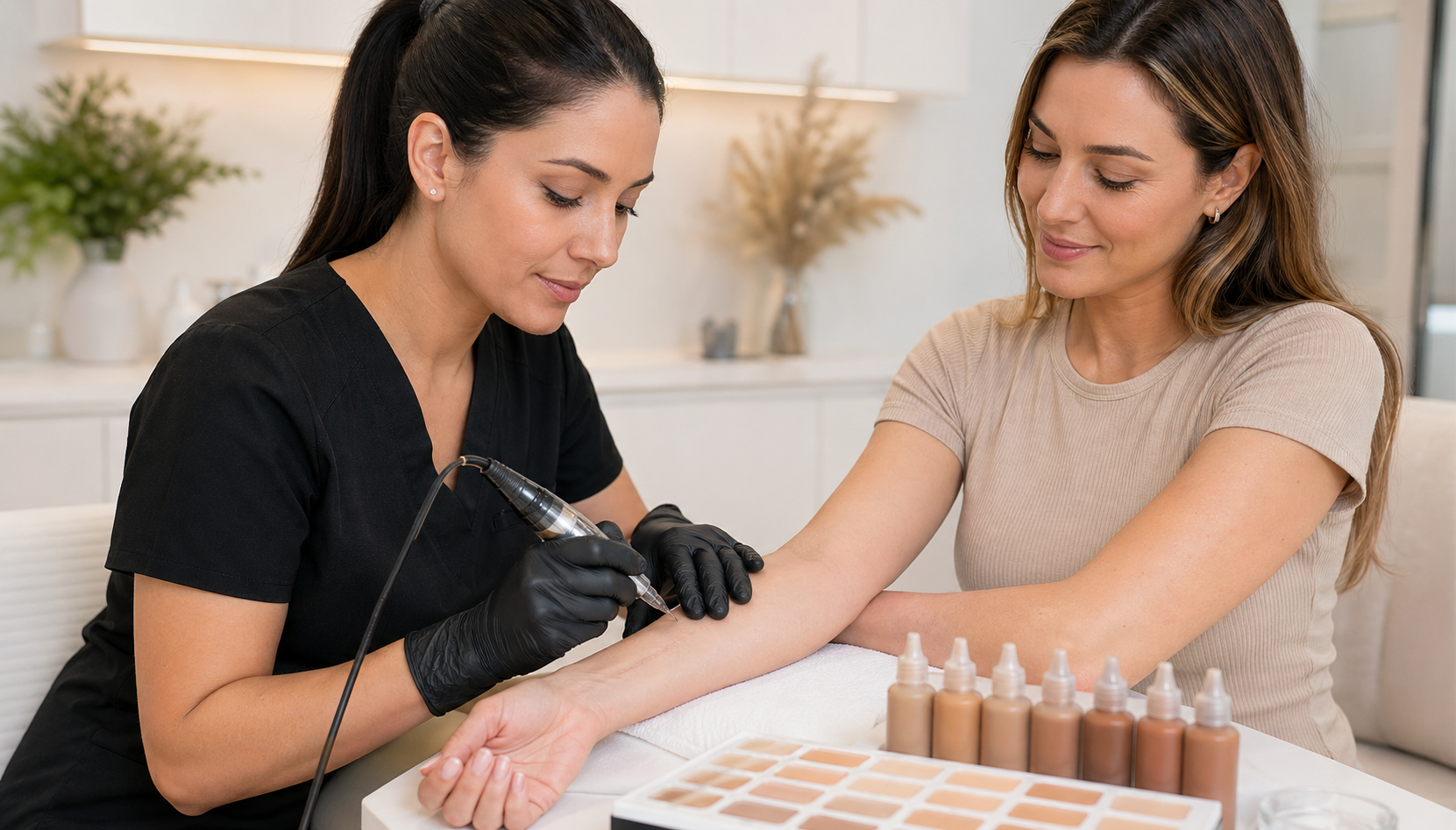
After the consultation, pigment selection begins. The specialist studies the natural skin shade first. Then they choose pigment that blends with that tone. This step is very important for natural-looking results. Poor color choice can make the scar more noticeable.
During the treatment, the area is cleaned first. A numbing cream may be used for comfort. Then pigment is placed into the scarred skin carefully. This is done with professional tattoo equipment. The process is controlled, slow, and detailed.
A scar camouflage tattoo does not create a bold design. It is not meant to look like artwork. Instead, it reduces visible color contrast. This makes it different from a scar cover up tattoo. A cover up tattoo hides scars with creative designs.
A good scar camouflage treatment uses a soft approach. It does not try to overfill the skin with color. The pigment must settle naturally during healing. Final results appear after the skin fully recovers.
Skin Tone Matching and Pigment Selection
Skin tone matching is the most important part. The pigment must blend with nearby healthy skin. Every person has a different skin tone. Some people have warm undertones. Others have cool or neutral undertones.
A trained specialist studies these small color differences. They check how light touches the skin. They also compare the scar with surrounding areas. This helps create a better pigment match. A natural result depends on this careful process.
Valeriya Life uses advanced pigment-matching methods for scar blending. The service focuses on blending scars and stretch marks naturally. You can learn more through the scar camouflage tattoo service
Pigment may look darker right after treatment. This is normal during the early healing stage. As skin heals, the color often becomes softer. That is why final results need time. Patience is important after paramedical tattoo scar camouflage.
Scar tissue can hold pigment differently than normal skin. Some scars may absorb color unevenly. Some may need more than one session. A correction session may improve the final match. This is common with tattoo camouflage for scars.
The specialist may mix several pigment shades together. This helps match the skin more closely. One flat color may not look natural. Real skin has many soft tones. A layered method can give a smoother result.
Sun exposure can also affect pigment choice. Tanned skin may look different from natural skin. This is why specialists often match stable skin tone. The goal is a result that looks balanced most days.
Patch Test Before Scar Camouflage Treatment
A patch test may be done before full treatment. It checks how scar tissue accepts the pigment. The specialist places a small amount of color first. Then the skin is allowed to heal. This helps predict the final result.
A patch test is helpful because scars behave differently. Normal skin and scar tissue do not heal the same. Scar tissue may be firm, thin, raised, or sensitive. It may also reject pigment more easily. Testing first helps avoid poor color results.
This step also supports safety and trust. It helps the client understand the healing process. It also gives the specialist useful information. They can adjust pigment shade or technique afterward. This leads to a more careful treatment plan.
During healing, the tested area may look darker first. Mild redness or swelling may also appear. These changes usually reduce as skin recovers. The final test color appears after healing. This helps guide the main session.
A patch test is especially useful for complex scars. It may help with surgical scars, injury scars, and stretch marks. It also helps when the skin tone is harder to match. This makes scar tattoo camouflage more planned and precise
Clients should follow all aftercare instructions after testing. They should avoid sun, picking, and harsh products. Good aftercare helps show the true healed color. It also protects the treated skin. This creates a better base for full treatment.
Types of Scars That May Be Treated
Different scars may be suitable for scar camouflage treatment. Each scar must be checked before treatment begins. The age, color, texture, and location matter. These details help decide the best treatment plan.
Surgical scars are common treatment areas. These may come from medical procedures or cosmetic surgery. Some surgical scars heal lighter than nearby skin. Paramedical tattoo scar camouflage may help soften their appearance. It can make the area look more even.
Injury scars may also be treated. These scars may come from cuts, accidents, or skin trauma. If the scar is healed and stable, camouflage may help. The goal is to reduce strong color contrast. This can make the scar less noticeable.
Stretch marks are another common concern. They may appear after pregnancy, growth, or weight changes. Some stretch marks become light and visible over time. Tattoo scar camouflage may help blend them with nearby skin. Valeriya Life includes stretch mark camouflage in its service focus.
Post-acne scars may also concern many people. Some acne marks leave lighter or uneven areas. Not every acne scar is right for tattooing. The skin must be checked with care first. A professional review helps avoid unsafe treatment choices.
Burn scars may need extra caution. Burned skin can be sensitive and uneven. Some burn scars may not hold pigment well. Others may need medical clearance before treatment. A trained specialist should always assess them first.
When Scar Camouflage Treatment May Not Be Suitable
Scar camouflage treatment is not right for every scar. Some scars need more time before pigment work. A fresh scar should not be treated too early. New scars can still be red, pink, or changing.
Red, purple, or dark scars may not be ready. These colors can show active healing or skin changes. Pigment may not blend well in these cases. Waiting longer may give safer results. A specialist can guide the right timing.
Raised scars may also need careful review. These include thick scars or keloid-prone areas. Tattooing raised scars may irritate sensitive tissue. It may also worsen the scar in some cases. Clients with keloid history should seek expert advice first.
Scars with uneven texture may be harder to camouflage. Pigment can improve color, not deep texture. If the skin has dents or raised areas, shadows may remain. This is why results can vary. Honest guidance is important before starting treatment.
Very dark scar borders may not blend well. Skin-like pigment cannot always cover dark edges fully. In some cases, other skin treatments may be recommended first. This helps prepare the scar for better results later.
People with certain skin concerns should speak with a professional. This includes active infections, open wounds, or inflamed skin. Treatment should only happen on healthy, healed skin. This supports safer healing and better pigment retention.
Choosing the right specialist matters greatly. Tattoo camouflage for scars needs training and care. It is different from a simple scar cover up tattoo. The specialist must understand scar tissue and skin tones. Readers can learn more through the scar camouflage tattoo
What Results Can You Expect?
Tattoo scar camouflage can make scars look softer and calmer. It helps reduce the strong color difference between skin and scar. The goal is not to remove the scar completely. Instead, it helps the scar blend with nearby skin.
Results depend on the scar type and skin condition. Flat and light scars may show better improvement. Some scars may need more than one session. A professional scar camouflage treatment starts with proper skin checking. This helps set clear and honest expectations.
Healing Timeline After Tattoo Scar Camouflage
The treated area may look darker at first. This is normal after a scar camouflage tattoo session. Mild redness, dryness, or sensitivity may also happen. These changes usually improve as the skin heals.
The pigment becomes softer during the healing period. Final results may take several weeks to appear. Clients should follow aftercare instructions carefully. Good aftercare helps protect pigment and skin health.
Aftercare Tips for Better Results
Aftercare plays an important role in final results. Keep the treated area clean and dry. Avoid scratching, rubbing, or picking the skin. These actions can affect pigment healing.
Avoid strong sun exposure during the healing stage. Swimming, sweating, and harsh products should also be avoided. Follow the specialist’s instructions after paramedical tattoo scar camouflage. This supports smoother healing and better color balance.
Benefits and Safety of Tattoo Scar Camouflage
Tattoo camouflage for scars offers a natural-looking improvement. It can help skin look more even and balanced. Many people choose it instead of a scar cover up tattoo. They prefer soft blending over visible artwork.
Safety depends on skill, hygiene, and proper tools. Choose a trained specialist with scar tissue experience. At Valeriya Life, the focus is natural scar blending and care. Learn more through the scar camouflage tattoo service.
Conclusion
Tattoo scar camouflage is a helpful option for softer-looking scars. It uses skin-toned pigment to blend scars with nearby skin. This treatment does not remove scars completely. However, it can make them look less visible and more natural. A professional scar camouflage treatment works best with proper consultation, pigment matching, healing care, and realistic expectations. If you want to learn more, visit Valeriya Life. You can also Book Appointment online or call 531-777-2752 for more details.